Extracteur, presse-agrumes ou à la main : quelle méthode donne le plus de jus ?
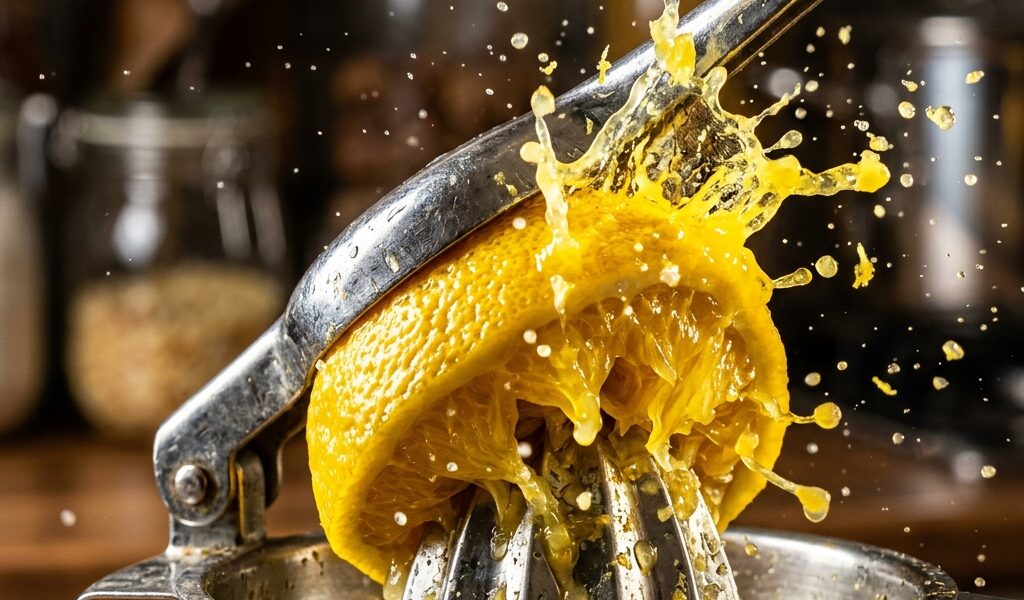
Lorsque l’on presse des citrons régulièrement, l’efficacité de l’extraction devient un enjeu économique et pratique. Personne ne souhaite jeter la moitié du jus restée prisonnière de la pulpe et des fibres. Entre l’extraction manuelle rapide, le presse-agrumes électrique classique et l’extracteur de jus de dernière génération (Slow Juicer), quelle méthode permet d’obtenir le meilleur rendement d’extraction au millilitre près ?
Réponse rapide : C’est le presse-agrumes électrique à rotation alternée qui offre le meilleur rendement en jus pour le citron, tout en étant le plus rapide. L’extracteur de jus (à vis sans fin) est excellent pour extraire le jus d’un citron pelé mais perd de l’efficacité si le fruit est passé entier avec l’albédo épais. Le pressage à la main est le moins efficace, laissant jusqu’à 30 % du jus dans le fruit.
L’explication scientifique : Pression mécanique, structure des vésicules et rendement d’extraction
La pulpe du citron est constituée de vésicules de jus (ou sacs à jus), qui sont des structures cellulaires multicellulaires à paroi mince dérivées de l’endocarpe. Pour libérer le jus, ces vésicules doivent être rompues mécaniquement. Le pressage manuel applique une pression unidirectionnelle imparfaite qui compresse les vésicules les unes contre les autres sans toutes les déchirer, d’où un rendement d’extraction faible (environ 50 à 60 % du poids en jus).
Le presse-agrumes (manuel à levier ou électrique) utilise un cône strié qui épouse la forme de l’endocarpe du citron. La rotation combinée à la pression verticale cisaille les parois des vésicules de jus directement contre la peau du fruit, libérant la quasi-totalité du liquide disponible (rendement d’environ 80-85 %). L’extracteur de jus vertical ou horizontal applique une pression extrême via une vis sans fin (force de compression axiale) contre un tamis métallique. Si le citron est pelé (zeste et albédo retirés), le rendement est maximal et le jus est parfaitement filtré. En revanche, si le citron est passé avec sa peau blanche (albédo), celle-ci agit comme une éponge sèche et absorbe une grande partie du jus libéré, réduisant considérablement le rendement final et introduisant des composés amers (limonine).
Retour d’expérience : Mon test de pesée sur 3 citrons de même calibre
J’ai réalisé un test comparatif rigoureux en achetant 3 citrons bio de même poids (environ 120g chacun) : – Citron 1 (pressé à la main vigoureusement) : 38 ml de jus obtenus. La pulpe restante était encore très humide. – Citron 2 (pressé avec un presse-agrumes électrique classique avec cône rotatif) : 54 ml de jus obtenus. La peau du citron était totalement vidée, ne laissant que la membrane blanche fine. – Citron 3 (pelé à vif et passé à l’extracteur à vis sans fin) : 51 ml de jus obtenus. La texture du jus était extrêmement fine et veloutée, mais l’opération a nécessité beaucoup de nettoyage de l’appareil. Ma conclusion : le presse-agrumes électrique classique reste le meilleur rapport efficacité/temps de nettoyage au quotidien.
Conclusion
Pour un usage quotidien simple et un rendement d’extraction optimal du jus de citron, le presse-agrumes électrique à cône rotatif est l’outil imbattable. L’extracteur de jus doit être réservé à la préparation de mélanges complexes de jus de légumes.