Jus de citron devenu soudainement amer : l’erreur fatale de pressage à éviter absolument
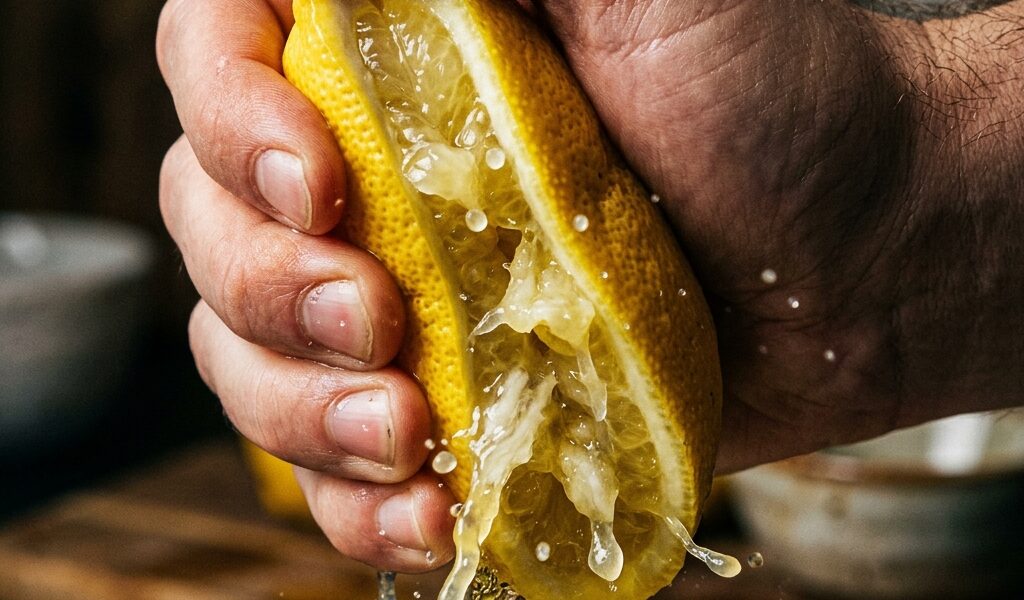
Il vous est sûrement déjà arrivé de presser un citron avec enthousiasme, de verser son jus dans un plat ou une boisson, et de constater avec horreur qu’il présente une amertume prononcée et désagréable qui gâche tout le goût. Ce phénomène n’est pas lié à la variété du citron ni à son manque de maturité, mais à une erreur technique précise commise au moment du pressage. Quelle est cette erreur et comment l’éviter ?
Réponse rapide : L’amertume du jus de citron provient de l’extraction accidentelle des composés amers (comme la limonine et la naringine) logés dans les pépins, l’albédo (la peau blanche) ou le zeste. L’erreur principale consiste à presser le citron avec une force excessive (notamment avec des presse-agrumes à vis ou des presses à levier trop puissantes) qui écrase les pépins ou cisaille l’albédo blanc. Un pressage modéré et sans écraser les parties blanches élimine ce risque.
L’explication scientifique : Limonine, naringine et phénomène de “Delayed Bitterness”
L’amertume des agrumes est principalement due à deux classes de composés chimiques : les limonoïdes (comme la limonine) et les flavonoïdes glycosylés (comme la naringine). Dans le citron frais, la limonine est présente sous une forme inactive non amère : le monolactone de limonoate. Cette molécule est localisée dans les membranes de l’albédo, dans l’écorce et dans l’enveloppe des pépins.
Lorsque le citron est pressé avec une force mécanique excessive, les parois cellulaires de ces structures sont endommagées, libérant le monolactone de limonoate dans le jus acide. Sous l’action du pH acide du jus de citron, ce composé subit une lactonisation acide rapide (conversion catalysée par les protons H+) pour se transformer en limonine active, qui possède un pouvoir amer extrêmement élevé détectable à des concentrations infimes (de l’ordre de quelques parties par million – ppm). C’est ce qu’on appelle en biochimie le phénomène d’amertume retardée ou “Delayed Bitterness” : le jus peut sembler doux immédiatement après pressage, mais devient très amer après 30 minutes d’attente à température ambiante.
Retour d’expérience : Mes erreurs avec le presse-citron en fonte d’aluminium
Pendant longtemps, j’utilisais un presse-citron manuel à levier en fonte d’aluminium (type presse-ail géant) pour extraire le jus de mes citrons. Je pressais le levier à fond, jusqu’à ce que la peau du citron soit presque plate et sèche. Le jus obtenu présentait systématiquement un arrière-goût amer très désagréable qui masquait le côté fruité du citron. J’ai compris que l’appareil exerçait une pression mécanique telle qu’il brisait les pépins présents à l’intérieur et écrasait l’albédo. Depuis, je suis repassé à un presse-agrumes manuel en verre classique à cône strié : je frotte le demi-citron doucement sur le cône sans jamais insister sur la peau blanche interne. Mon jus est désormais d’une clarté aromatique parfaite, sans aucune amertume.
Conclusion
Pour éviter l’amertume dans vos jus de citron, la douceur est de rigueur. Ne cherchez pas à extraire la toute dernière goutte de jus en écrasant la peau blanche ou les pépins du fruit. Un pressage délicat garantit une qualité gustative incomparable.