Faire pasteuriser son jus de citron maison : technique, avantages et temps de chauffe
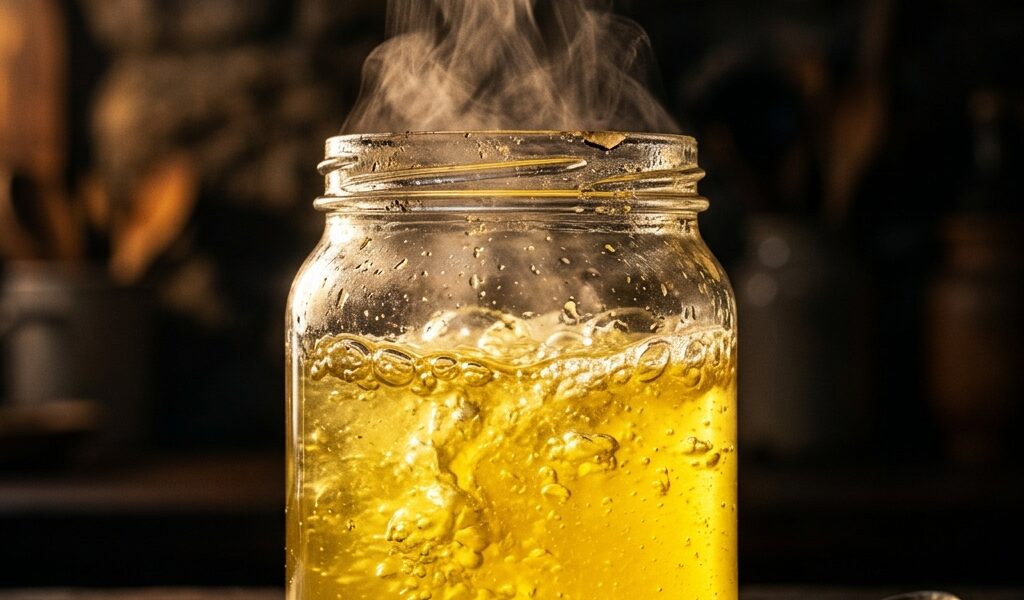
Pour conserver du jus de citron maison sur plusieurs mois sans avoir recours à la congélation, la pasteurisation est la méthode de référence utilisée par l’industrie agroalimentaire. Elle permet de stocker des bouteilles à température ambiante dans sa cave. Cependant, chauffer du jus de citron détruit-il toutes ses qualités nutritionnelles ? Comment réaliser une pasteurisation domestique efficace tout en préservant le goût frais de l’agrume ?
Réponse rapide : La pasteurisation du jus de citron maison consiste à chauffer le jus à 72°C pendant exactement 15 secondes (pasteurisation éclair ou Flash Pasteurisation), puis à le refroidir immédiatement et à le mettre en bouteilles stérilisées à chaud. Cette méthode détruit les levures et bactéries d’altération sans altérer excessivement la vitamine C et le goût du jus, permettant une conservation en bouteilles fermées pendant 6 à 12 mois.
L’explication scientifique : Dénaturation enzymatique, pasteurisation basse vs haute et thermorésistance
L’objectif de la pasteurisation du jus de citron est double : détruire la flore microbienne d’altération (levures, moisissures) et inactiver les enzymes endogènes, en particulier la pectine méthylestérase (PME). La PME est responsable de la clarification indésirable du jus en coupant les molécules de pectine, ce qui provoque la précipitation de la pulpe et donne un jus biphasique peu appétissant.
L’acide citrique abaisse le pH du jus à 2, ce qui augmente considérablement la sensibilité thermique des micro-organismes. En milieu acide, la température requise pour détruire les levures et moisissures est beaucoup plus basse qu’en milieu neutre. C’est pourquoi une température de 72°C pendant 15 secondes (barème thermique modéré) suffit pour obtenir la stabilité microbiologique recherchée (valeur pasteurisatrice F suffisante). Une température supérieure à 80°C déclencherait des réactions de brunissement non enzymatique (dégradation thermique de l’acide ascorbique en furfural) et donnerait au jus un goût indésirable de fruits cuits ou de caramel. Le refroidissement rapide post-chauffage est crucial pour stopper immédiatement les cinétiques de dégradation thermique.
Retour d’expérience : Mes bouteilles de jus pasteurisé conservées 6 mois
Pour stocker le surplus de ma récolte de citrons, j’ai tenté la pasteurisation à la maison. J’ai pressé 3 litres de jus de citron bio. Dans une grande casserole en inox (surtout pas en aluminium pour éviter la corrosion acide), j’ai chauffé le jus en remuant constamment à l’aide d’un thermomètre de cuisine précis. Dès que la température a atteint 72°C, j’ai compté 15 secondes, puis j’ai versé le jus brûlant directement dans de petites bouteilles en verre préalablement stérilisées, que j’ai scellées immédiatement. J’ai plongé les bouteilles dans un bain d’eau froide avec des glaçons pour accélérer le refroidissement. Six mois plus tard, la couleur jaune vif était intacte et le goût était excellent, avec juste une infime perte de la fraîcheur acidulée originelle.
Conclusion
La flash-pasteurisation domestique à 72°C est une méthode très efficace pour conserver le jus de citron maison sans conservateurs chimiques. C’est le compromis parfait entre conservation à long terme et préservation de la richesse nutritionnelle du fruit.