Verre vs Plastique : pourquoi l’emballage modifie le goût de votre jus de citron industriel
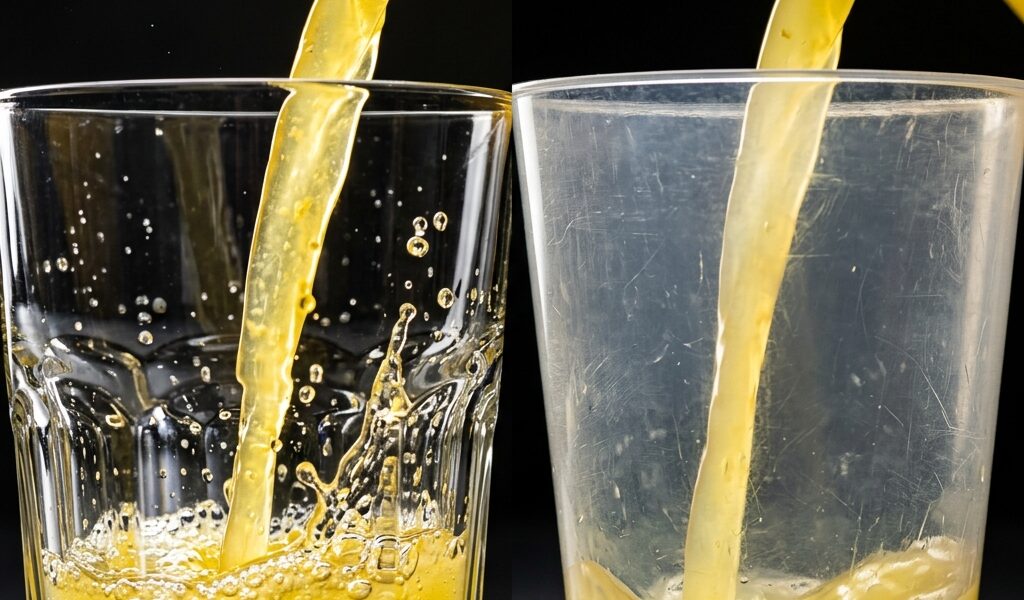
Le jus de citron industriel est vendu sous deux formes d’emballage principales : en bouteilles en verre ou en flacons en plastique jaune. Si le plastique est apprécié pour sa légèreté et sa résistance aux chocs en cuisine, les gourmets préfèrent systématiquement le verre. Est-ce un simple snobisme esthétique ou existe-t-il des raisons chimiques réelles pour lesquelles le plastique altère le goût et la qualité du jus de citron ?
Réponse rapide : Le verre est le seul emballage inerte qui préserve le goût du jus de citron. Le plastique (PET ou PE) réagit chimiquement avec l’acide citrique du jus, provoquant une migration de molécules de plastique dans la boisson. De plus, le plastique laisse passer l’oxygène de l’air (perméabilité gazeuse), ce qui oxyde le jus, détruit la vitamine C et modifie le goût en quelques semaines.
L’explication scientifique : Perméabilité gazeuse, migration de monomères et inertie du silice
Le choix du contenant pour un produit à très bas pH (2,0) comme le jus de citron est un défi technologique majeur en emballage alimentaire : 1. **L’inertie du verre** : Le verre est composé de silice (SiO2) fusionné à haute température. C’est un matériau amorphe totalement inerte face aux attaques acides. Les ions H+ libres de l’acide citrique ne peuvent pas réagir avec le réseau de silice. Le goût reste inchangé. 2. **La perméabilité à l’oxygène du plastique** : Les plastiques (comme le PET) sont des polymères organiques semi-cristallins. Ils présentent une perméabilité gazeuse intrinsèque (les molécules d’oxygène peuvent traverser la paroi plastique par diffusion). Cet afflux d’oxygène oxyde l’acide ascorbique en furfural, altérant la couleur (brunissement) et créant des goûts désagréables de carton ou de miel rance. Le verre est totalement imperméable aux gaz. 3. **La migration chimique induite par l’acide** : Le pH acide du jus favorise l’hydrolyse des liaisons ester du plastique. Des monomères de synthèse et des additifs (tels que l’antimoine ou les phtalates) migrent dans le jus, altérant le profil aromatique par des notes chimiques ou plastifiées.
Retour d’expérience : Test de conservation verre vs plastique sur 2 mois
J’ai mené une expérience en répartissant un même lot de jus de citron bio frais dans deux bouteilles stérilisées de 250 ml : l’une en verre transparent bouchée hermétiquement, l’autre en plastique PET de récupération d’eau minérale. Les deux ont été stockées au réfrigérateur pendant deux mois. – Au bout de 60 jours, le jus dans la bouteille en plastique avait pris une teinte jaunâtre-grise terne et dégageait une odeur de plastique chaud très désagréable. Le goût était acide mais avec une note chimique persistante en fin de bouche. – Le jus dans la bouteille en verre avait conservé sa couleur jaune clair d’origine et son parfum d’agrumes propre. Le goût était vif et sans aucune déviation aromatique. Cet essai démontre l’absolue nécessité de bannir le plastique pour le stockage de liquides très acides.
Conclusion
Pour conserver votre jus de citron industriel ou maison, refusez les emballages en plastique. Le flacon en verre est le garant indispensable de l’intégrité chimique, nutritionnelle et gustative de votre jus de citron.